Artist Sankhya’s latest Himalaya series, currently on display at Mahatma Gandhi Kashi Vidyapith, invites viewers into a world shaped by silence, stillness, and spiritual reflection. Through a collection of paintings inspired by the Himalayan landscape, the exhibition explores the emotional and meditative experience of the mountains rather than simply documenting their physical beauty. The works …
Sankhya’s ‘Himalaya’ Series Turns Silence and Solitude into Visual Poetry
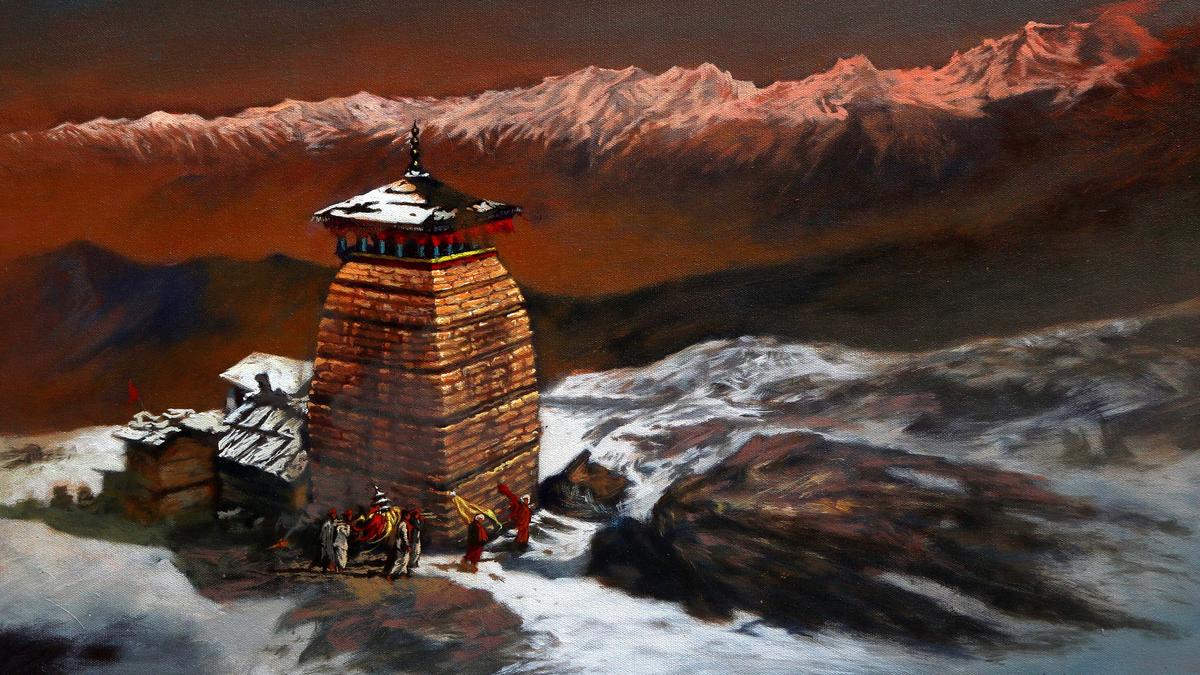
Artist Sankhya’s latest Himalaya series, currently on display at Mahatma Gandhi Kashi Vidyapith, invites viewers into a world shaped by silence, stillness, and spiritual reflection. Through a collection of paintings inspired by the Himalayan landscape, the exhibition explores the emotional and meditative experience of the mountains rather than simply documenting their physical beauty.
The works move beyond conventional landscape painting, focusing instead on mood and atmosphere. Mist-covered peaks, quiet valleys, flowing rivers, and empty stretches of terrain are portrayed with restrained colours and layered textures that evoke solitude and introspection. The paintings create a sense of distance from urban chaos, encouraging viewers to slow down and absorb the calm embedded within the imagery.
According to the exhibition’s central theme, the Himalayas are presented not merely as geographical spaces but as spiritual landscapes associated with contemplation and sacred silence. Sankhya’s visual language leans toward minimalism, allowing empty spaces, muted tones, and subtle transitions of light to communicate emotion as powerfully as detailed forms.
The exhibition also reflects the long-standing connection between Indian art and the Himalayas. Across generations, artists, writers, and spiritual thinkers have viewed the mountains as symbols of transcendence, wisdom, and inner awakening. Sankhya’s interpretation continues that tradition while giving it a contemporary emotional sensibility.
Hosted at the Varanasi institution, the showcase creates an interesting dialogue between art, spirituality, and academia. The setting adds another layer to the exhibition, especially in a city already deeply associated with philosophical reflection and sacred traditions.
Rather than overwhelming viewers with dramatic imagery, the Himalaya series draws attention to quiet moments — drifting clouds, fading light, and vast untouched spaces. In doing so, the exhibition becomes less about the mountains themselves and more about the emotional stillness they inspire.