A recent workshop in Visakhapatnam showcased how sustainability and art can come together, transforming agricultural waste into a creative resource. The session focused on making paper from banana stems—an often discarded byproduct of farming. Participants were introduced to the process of extracting fibre, converting it into pulp, and eventually shaping it into sheets of handmade …
Eco-Art in Focus as Banana Stem Paper Workshop Engages Participants
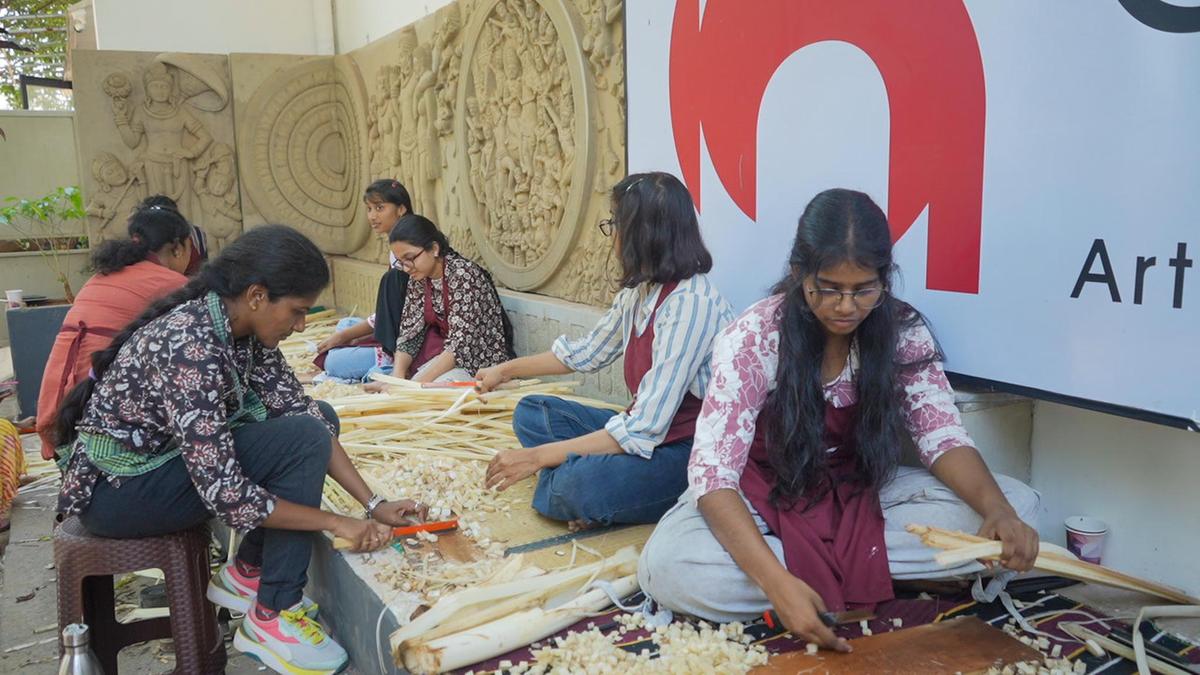
A recent workshop in Visakhapatnam showcased how sustainability and art can come together, transforming agricultural waste into a creative resource.
The session focused on making paper from banana stems—an often discarded byproduct of farming. Participants were introduced to the process of extracting fibre, converting it into pulp, and eventually shaping it into sheets of handmade paper. The workshop highlighted how everyday organic waste can be repurposed into something both functional and artistic.
Banana stems, commonly used in cooking in parts of India, are rich in fibre and lend themselves well to paper-making, offering an eco-friendly alternative to wood-based paper production. banana stem fibre is biodegradable and sustainable, making it an ideal material for environmentally conscious crafts.
What made the workshop significant was its focus on awareness as much as technique. By demonstrating the entire process—from raw material to finished product—it encouraged participants to rethink waste and explore sustainable practices in their own creative work.
The initiative also reflects a growing interest in eco-art practices across Indian cities, where artists and educators are experimenting with natural materials to reduce environmental impact. Workshops like this not only promote craftsmanship but also contribute to conversations around sustainability, resource reuse, and mindful production.
In essence, the event was less about paper-making alone and more about shifting perspectives—showing how innovation can begin with something as simple as reimagining waste.