In a ruling that underscores the challenges of valuing art and insuring it, New York State Supreme Court Justice Joel M. Cohen rejected billionaire investor Ron Perelman’s $410 million claim against multiple insurance underwriters. The dispute centered on five artworks—including pieces by Andy Warhol, Ed Ruscha, and Cy Twombly—that Perelman alleged were damaged in a …
Judge Rejects Collector Ron Perelman’s $410M Insurance Claim Over Allegedly Damaged Art
In a ruling that underscores the challenges of valuing art and insuring it, New York State Supreme Court Justice Joel M. Cohen rejected billionaire investor Ron Perelman’s $410 million claim against multiple insurance underwriters. The dispute centered on five artworks—including pieces by Andy Warhol, Ed Ruscha, and Cy Twombly—that Perelman alleged were damaged in a 2018 fire at his East Hampton estate, The Creeks.
Background: The 2018 Fire at Perelman’s Hamptons Estate
The Creeks: A Storied Collection at Risk
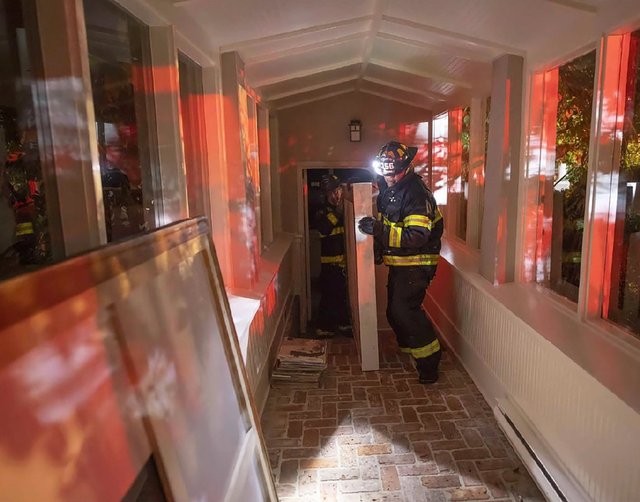
Ron Perelman’s East Hampton home, The Creeks, has long been known as one of the most prestigious private art collections in the U.S. In 2018, the property was engulfed in flames, raising concerns about the fate of major works housed there.
Firefighting Efforts and the Alleged Damage
While firefighters successfully prevented total destruction, Perelman later claimed that smoke and sprinkler water had compromised five important works. In his words, the pieces had lost their “luster, depth, and character,” an intangible but, he argued, significant diminishment of value.
The Lawsuit: Perelman vs. Insurance Underwriters
The Claim of “Lost Spark”
Perelman insisted that the fire stripped the works of their “oomph,” making them less desirable to collectors and diminishing their artistic vitality.
The $410M Payout Request
Filed through one of his holding companies, the lawsuit demanded a staggering $410 million insurance payout, while the underwriters countered that the works were worth only around $100 million—and crucially, that they were not damaged.
Works at the Center of the Dispute
Warhol’s Elvis (21 Times)
One of Warhol’s largest works, Elvis (21 Times), was a focal point of the dispute. Perelman argued that the piece lost its defining qualities after the fire, though insurers maintained it was unchanged.
Ruscha and Twombly’s Contributions
Additional works by Ed Ruscha and Cy Twombly were also claimed to have been affected, though no visible signs of damage were documented.
The Trial Proceedings
Divergent Valuations: $410M vs. $100M
The trial highlighted the subjective nature of art valuation. While Perelman’s experts supported his higher figure, insurers insisted the works retained both their integrity and market value.
The Role of Subjectivity in Art Valuation
The case raised a fundamental question: Can loss of intangible qualities—like “spark” or “depth”—be quantified in financial terms? For Cohen, the answer was no.
Judge Joel M. Cohen’s Ruling
No “Visible Damage” to the Paintings
Cohen ultimately sided with the insurers, concluding that there was no visible damage to the five works in question.
Rejection of False Testimony Claims
Although he rejected the insurance underwriters’ claim that Perelman knowingly gave false testimony, Cohen emphasized the insufficiency of arguments based solely on subjective impressions.
The Larger Context: Perelman’s Financial Troubles
The Revlon Bankruptcy and Fire Sale of Art
The timing of the lawsuit coincided with Perelman’s financial difficulties at Revlon, where he was the majority shareholder. The cosmetics giant entered bankruptcy in 2023.
Nearly $1B in Art Sold to Repay Creditors
Court documents revealed that between March 2020 and January 2022, Perelman sold 71 works of art for $963.3 million, of which $910.3 million went to repay creditors.
The Role of Dealers and Collectors in the Case
Larry Gagosian and Ken Griffin’s Involvement
Insurers alleged that prominent art dealer Larry Gagosian and billionaire collector Ken Griffin were invited to view one of the contested works in 2020, before the lawsuit was filed.
Allegations of Selling Attempts Before Filing
This raised suspicions that Perelman may have sought to sell the works but, unable to do so, pursued insurance claims instead.
Implications for the Art Market
Can Intangible Qualities Be Insured?
The case sets an important precedent: while physical damage is insurable, a perceived loss of artistic vitality or “spark” is not legally recognized as a compensable loss.
The Precedent for Future Art Insurance Cases
Collectors and insurers alike are now on notice that the subjectivity of art appreciation does not translate easily into legal or financial claims.
Frequently Asked Questions (FAQs)
1. What was Ron Perelman claiming in his lawsuit?
Perelman claimed that five artworks lost their artistic “spark” due to smoke and water damage from a 2018 fire, justifying a $410M insurance payout.
2. Which artworks were involved in the dispute?
Works by Andy Warhol, Ed Ruscha, and Cy Twombly, including Warhol’s Elvis (21 Times), were at the center of the case.
3. What did the judge decide?
Justice Joel M. Cohen ruled that there was no visible damage to the works and denied Perelman’s claim.
4. Did Perelman sell artworks after the fire?
Yes, he sold 71 works between 2020 and 2022, raising nearly $1B, mostly to repay creditors tied to his financial troubles.
5. Why is this case significant for the art world?
It highlights the difficulties of valuing art and sets a precedent that subjective qualities like “spark” cannot be insured.
6. Will Perelman appeal the decision?
As of now, his legal team has not confirmed whether they will appeal.
Conclusion: A Landmark Case on Art, Value, and Insurance
The rejection of Ron Perelman’s $410M claim illustrates a defining tension in the art world: while collectors and insurers acknowledge that art carries intangible qualities beyond its physical condition, the legal system requires tangible, visible evidence of damage. The case has set a precedent for how courts may treat future disputes involving the “soul” of an artwork—a quality felt by many, but difficult, if not impossible, to monetize.