Introduction: Panorama Turns to Pozzuoli This September, the ancient town of Pozzuoli, just northwest of Naples, was transformed into a vibrant stage for contemporary art. The fifth edition of Panorama, Italy’s roving exhibition organized by the Italics consortium of leading commercial galleries, brought together 47 artists and 45 galleries under the curation of Chiara Parisi, …
Near Naples, Pozzuoli Becomes a Contemporary Art Hub for Panorama 2025
Introduction: Panorama Turns to Pozzuoli
This September, the ancient town of Pozzuoli, just northwest of Naples, was transformed into a vibrant stage for contemporary art. The fifth edition of Panorama, Italy’s roving exhibition organized by the Italics consortium of leading commercial galleries, brought together 47 artists and 45 galleries under the curation of Chiara Parisi, director of the Centre Pompidou-Metz.
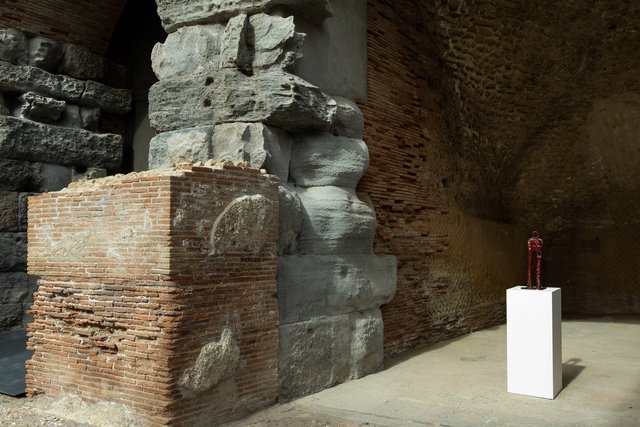
For five days (10–14 September 2025), Pozzuoli’s Roman amphitheatre, churches, and archaeological sites became immersive backdrops for works by renowned artists such as Simone Fattal and William Kentridge, reframing the town’s history through a lens of modern creativity.
The Ancient Backdrop of Pozzuoli
A Town Steeped in Greek and Roman Heritage
Founded in 531 BC as a Greek colony, Pozzuoli sits within the Phlegraean Fields, a volcanic area layered with history. Its Roman amphitheatre—the third largest in Italy—still holds echoes of gladiatorial combat, while nearby Cuma was once the spiritual heart of Mediterranean mythology.
Sophia Loren and the Modern Cultural Identity
Pozzuoli is also the birthplace of Sophia Loren, whose cinematic legacy was honored with exhibitions in a local cinema that now bears her name, bridging past and present cultural narratives.
Panorama 2025: Theme of Deification
Why Pozzuoli is a “Divine Land”
Curator Chiara Parisi described Pozzuoli as “a divine land” shaped by volcanic coexistence and mythological heritage. Deification wasn’t an abstract idea here but one rooted in daily life, mythology, and survival amidst natural volatility.
Curator Chiara Parisi’s Vision
Parisi emphasized that deification threads through Pozzuoli’s psyche—from the Sibyl of Cuma to Virgil, from ancient gods to the modern-day icon Sophia Loren. The exhibition sought to highlight how art can embody both myth and lived experience.
Highlights of the Exhibition
Simone Fattal in the Flavian Amphitheatre
In the amphitheatre, Simone Fattal’s bronze sculptures echoed Roman statuary, blurring the line between archaeology and contemporary sculpture.
Sound Installations in Ancient Chambers
Artist Clarissa Baldassari filled underground passages with a sound piece inspired by glossolalia (speaking in tongues), transforming the ruins into a spiritual experience.
William Kentridge’s Film at Cuma
At the archaeological park of Cuma, Kentridge’s film Sibily (2020) was installed within a cavernous ruin once dedicated to Venus and Jupiter—melding myth, history, and modern political allegory.
Simon Starling’s Caravaggio-Inspired Work
In the Sedile dei Nobili, Simon Starling created a piece in dialogue with Caravaggio’s Beheading of John the Baptist, painted in Naples in 1608, grounding the exhibition in Baroque heritage.
The Consortium Behind Panorama
Italics: Italy’s Leading Galleries United
Panorama is spearheaded by Italics, a network of Italian galleries formed during the pandemic to strengthen collaboration and visibility for contemporary artists.
Supporting Artists During and After the Pandemic
By organizing site-specific exhibitions across Italy, Italics sought to revitalize overlooked territories while giving artists new contexts to reimagine their work.
Pozzuoli as a Living Challenge for Artists
The Volcanic Landscape and Bradyseism
Pozzuoli’s geography is in constant flux. Bradyseism, the gradual rising and sinking of the earth, lifted Pozzuoli by two meters in the 1980s, forcing the evacuation of 40,000 residents from the Rione Terra district. The phenomenon continues today, giving the land an unstable yet inspiring energy.
Rione Terra’s Transformation
Recently restored, Rione Terra could become a cultural nucleus, with plans for art and heritage programming in its ancient structures.
The Future of Rione Terra
Cultural Stakeholders and Restoration Plans
A coalition—including the Diocese of Pozzuoli, the Archaeological Park of Campi Flegrei, and local authorities—is drafting a strategic plan for cultural development in Rione Terra.
Opportunities for Galleries and Cultural Growth
The plan envisions permanent and temporary exhibitions, potentially allowing galleries to occupy restored spaces, merging preservation with cultural entrepreneurship.
Panorama’s Legacy Across Italy
Previous Editions in Procida and Monferrato
Earlier editions activated Procida and Monferrato, bringing contemporary art into local communities. Pozzuoli continues this legacy of cultural rediscovery.
Revitalizing Hidden Territories Through Art
By spotlighting lesser-known regions, Panorama fosters cultural tourism, driving economic and social revitalization.
Local and Regional Impact
Campanians Rediscovering Forgotten Places
Parisi notes the exhibition’s triumph was seeing locals from Naples and Campania rediscover forgotten sites in their own backyard—through art.
Tourism Potential Beyond Naples
Pozzuoli, overshadowed by Naples and Pompeii, may now emerge as a destination for cultural tourism, combining Roman ruins, volcanic landscapes, and contemporary creativity.
FAQs
What is Panorama and who organizes it?
Panorama is an annual roving exhibition organized by Italics, a consortium of leading Italian galleries.
Why was Pozzuoli chosen for Panorama 2025?
Its rich Roman heritage, mythological history, and volcanic landscape made Pozzuoli a natural fit for the theme of deification.
What does “deification” mean in this context?
It refers to the town’s intertwining of myth, nature, and daily life, reflecting how people coexist with forces beyond their control.
What is the significance of Rione Terra in Pozzuoli?
Rione Terra, once evacuated due to bradyseism, is being restored as a potential cultural and artistic hub.
Which artists participated in Panorama 2025?
Artists included Simone Fattal, William Kentridge, Simon Starling, Clarissa Baldassari, among others.
How does Panorama benefit local communities?
It revitalizes lesser-known towns, boosts tourism, and integrates local heritage into contemporary global art dialogues.
Conclusion: Pozzuoli’s Cultural Revival Through Art
Panorama 2025 proved that contemporary art can breathe new life into ancient landscapes. By activating Pozzuoli’s Roman ruins and mythological sites, the exhibition created a dialogue between past and present, myth and reality, tradition and innovation.
With restoration plans for Rione Terra and growing cultural investment, Pozzuoli may become more than just a site for temporary exhibitions—it could emerge as a permanent cultural hub. For Italy, Panorama continues to demonstrate how art can transform overlooked places into vibrant centers of creativity and connection.