Colombia’s contemporary art market has entered a new era. While the early 2010s were marked by unprecedented growth, with booming gallery participation and a surge of international attention, the last decade has been far more complex. Yet, through challenges such as currency fluctuations, political uncertainty, and a post-pandemic slowdown, Artbo has remained the cornerstone of …
New Chapter for Artbo: Colombia’s Art Market Finds Resilience Amidst Flux
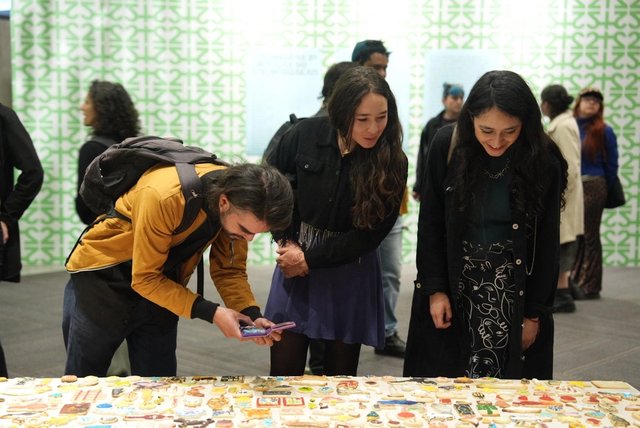
Colombia’s contemporary art market has entered a new era. While the early 2010s were marked by unprecedented growth, with booming gallery participation and a surge of international attention, the last decade has been far more complex. Yet, through challenges such as currency fluctuations, political uncertainty, and a post-pandemic slowdown, Artbo has remained the cornerstone of Colombia’s cultural landscape, proving that resilience is as much a part of the art world as creativity.
The Evolution of Colombia’s Art Market Over the Last Decade
From Boom to Flux: A Decade of Change
Ten years ago, Colombia was hailed as Latin America’s rising star in the global art scene. Bogotá’s Artbo was flourishing, doubling in size compared to today. Collectors, both domestic and international, were hungry for acquisitions, and Colombian galleries were thriving. But the boom eventually leveled out. Shifts in the economy, along with global art market turbulence, created a more cautious environment for collectors.
The Role of Artbo in Stabilizing the Market
Despite this, Artbo has played a stabilizing role. By maintaining its identity as both an elegant fair and a discovery platform, it continues to connect Colombian and Latin American art with global audiences. The fair remains a crucial point of convergence, ensuring that Bogotá is not overshadowed by more commercial markets like Mexico City or Miami.
The 21st Edition of Artbo: Key Highlights
A Changing of the Guard: Jaime A. Martínez Steps In
This year marks the first edition under new director Jaime A. Martínez, an art historian and former gallerist. His leadership represents a generational shift, prioritizing discovery and curatorial excellence while retaining the fair’s signature elegance.
International and Local Synergy with the Bogotá Biennial
Adding to the excitement is the inaugural Bogotá Biennial: Ensayos sobre la Felicidad, which launched just before Artbo. Together, these two events have transformed Bogotá into a vibrant hub, attracting curators, collectors, and institutions from across Latin America and beyond.
Market Resilience Amidst Economic Challenges
The Impact of Peso Devaluation and Inflation
The 2023 peso devaluation left collectors cautious. Inflation and shifting political dynamics compounded the uncertainty. Yet galleries and collectors adapted, negotiating carefully and keeping sales in the four- and five-figure ranges.
Adjusting to Post-Pandemic Realities
Like elsewhere, Colombia’s art market has been recalibrating after the pandemic. While participation is smaller compared to the boom years, the focus has shifted toward quality over quantity, with buyers prioritizing thoughtful acquisitions.
Strong Sales Despite Cautious Collecting
Notable Sales at the 2025 Fair
Several sales highlighted the resilience of the market:
- Galeria Vermelho sold works by Tania Candiani ($18,000) and Ximena Garrido-Lecca ($16,000).
- 193 Gallery placed works by Thandiwe Muriu ($8,500) and Joana Choumali ($16,500).
- Mor Charpentier sold multiple works by Guadalupe Maravilla, Mateo López, and Liliana Porter in the $15,000–$60,000 range.
The Role of International Galleries
Galleries with both Latin American and European bases, like Mor Charpentier, are strategically anchoring Bogotá in their programs, signaling long-term confidence in the Colombian art ecosystem.
Strategies for Galleries in a Shifting Market
Pricing Strategies and Collector Engagement
Pricing at this year’s fair was notably strategic, with galleries adjusting to local economic realities while still appealing to international buyers. Works were often placed within accessible four-figure brackets, balancing ambition with caution.
The Importance of Long-Term Commitment
Despite logistical challenges—such as customs delays and currency conversions—many galleries, particularly from Brazil and Europe, remain committed. Their presence underscores Bogotá’s role as a gateway to Latin American collecting.
Curatorial Sections Driving Cultural Dialogue
Textiles as Contemporary Language
The Proyectos section, curated by Carla Acevedo-Yates, showcased the radical potential of textiles. From ancestral knotting to contemporary fiber art, artists used fabric as a medium of political and cultural expression.
Blending Tradition with Technology
Highlights included Francisca Rojas’s reinterpretation of the quipu through binary coding and María Sosa’s monumental textile performances, both of which connect ancient traditions with digital-age conversations.
Case Studies of Notable Artists
Ximena Garrido-Lecca: Restoring Signals
Her Restauraciones de señal series uses materials and themes of restoration to address cultural memory and environmental concerns.
Guadalupe Maravilla: Healing and Migration
Maravilla’s deeply personal works, rooted in migration and spiritual healing, resonated strongly with collectors, reflecting the global relevance of his themes.
María Sosa: Textile Narratives of Colonization
Representing Mexico at the Venice Biennale 2026, Sosa’s work critiques colonialism’s legacy, particularly on women’s bodies, through large-scale textile interventions.
The Role of Collectors in Market Resilience
Colombian Collectors’ Careful but Critical Approach
Domestic collectors continue to play a pivotal role, demonstrating deep engagement with the work, though often within more modest acquisition budgets.
International Collectors Seeking Discovery
For collectors from Europe and North America, Artbo provides access to Latin American voices not always present in larger fairs, making Bogotá a discovery market.
Artbo’s Position in the Global South
Comparisons with Mexico and Miami Markets
While Colombia cannot compete in scale with Mexico City or Miami, its strength lies in regional focus and curatorial innovation, making it a complementary destination for collectors.
Strengthening Bogotá as a Regional Hub
With the Bogotá Biennial adding momentum, the city is positioning itself as a regional leader in contemporary art, balancing resilience with ambition.
The Future of Colombia’s Art Market
Opportunities for Emerging Artists
The fair’s curated sections and strong gallery programs continue to give visibility to emerging Latin American artists, ensuring fresh perspectives enter the market.
Institutional and Curatorial Support
With museums and biennials aligning with the fair, institutional collaboration is poised to strengthen Colombia’s long-term market position.
Frequently Asked Questions (FAQs)
1. What is Artbo and why is it important?
Artbo is Bogotá’s leading art fair, established by the Bogotá Chamber of Commerce, and it serves as a crucial platform for Latin American and Colombian contemporary art.
2. How did economic challenges affect Artbo 2025?
Despite inflation and currency issues, sales remained strong in the four- and five-figure range, showing the resilience of both local and international markets.
3. How does Artbo compare to fairs in Mexico City or Miami?
Artbo is smaller in scale but stands out for its curatorial depth and regional focus, making it attractive for collectors seeking new discoveries.
4. Who are some of the standout artists from the 2025 edition?
Notable names include Ximena Garrido-Lecca, Guadalupe Maravilla, María Sosa, and Francisca Rojas, among others.
5. What role did the new Bogotá Biennial play in this year’s fair?
The Biennial created a cultural synergy, drawing more international visitors and boosting Artbo’s visibility.
6. Who directs Artbo now?
The fair is now led by Jaime A. Martínez, an art historian and former gallerist, who emphasizes discovery and quality.
Conclusion: Artbo’s Resilient Role in Latin America’s Art Ecosystem
The 21st edition of Artbo reflects a market in transition, but one that is far from stagnant. With strategic gallery participation, strong curatorial programming, and the boost of the Bogotá Biennial, Colombia’s art scene demonstrates remarkable adaptability. While challenges remain, Artbo continues to prove that Bogotá deserves its place as a vital hub for Latin American contemporary art.