Olivia Fraser’s latest exhibition moves beyond visual beauty to explore something more introspective—how art can function as a form of meditation. At the centre of her work is the idea that painting is not just about representing the external world, but about mapping an inner one. Drawing from Indian miniature traditions, Fraser uses precise geometric …
Sacred Geometry Meets Miniature Art in Olivia Fraser’s New Exhibition
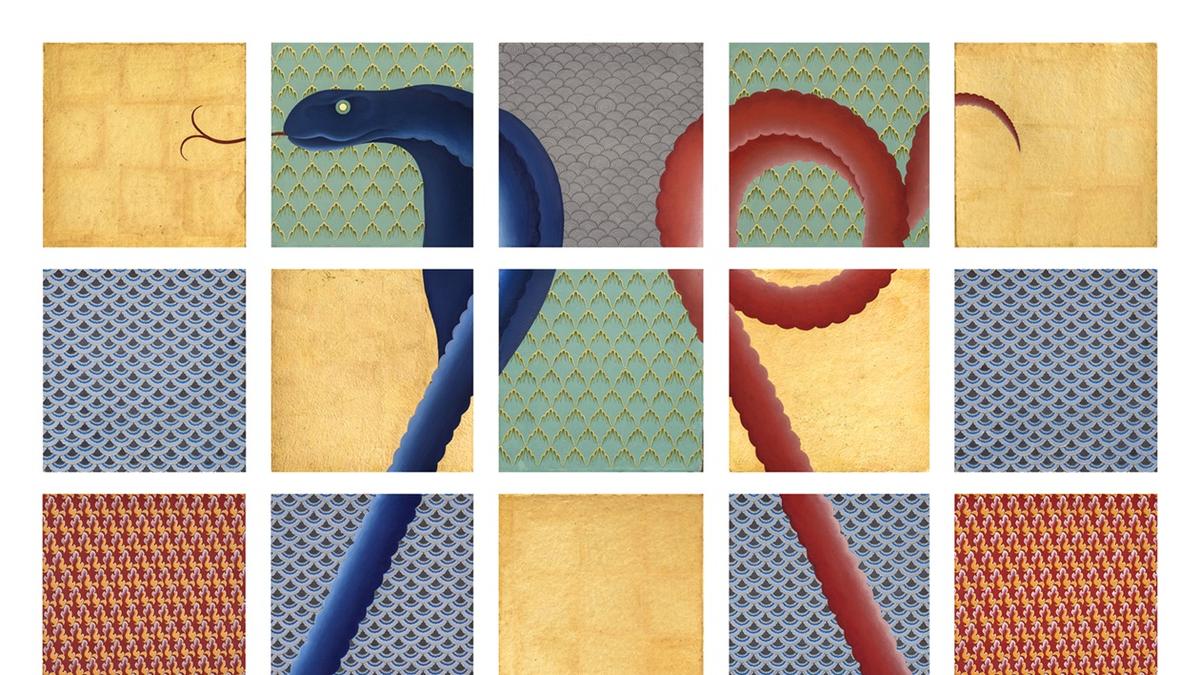
Olivia Fraser’s latest exhibition moves beyond visual beauty to explore something more introspective—how art can function as a form of meditation.
At the centre of her work is the idea that painting is not just about representing the external world, but about mapping an inner one. Drawing from Indian miniature traditions, Fraser uses precise geometric patterns and repetitive forms to create compositions that invite stillness and focus rather than quick viewing.
Her works are deeply influenced by tantric philosophy and sacred geometry, where shapes such as circles, triangles, and lotus-like patterns are not decorative elements but symbolic tools for contemplation. These forms often echo meditative practices, guiding the viewer’s gaze inward and creating a sense of rhythm and calm.
What makes her approach distinctive is the fusion of tradition and personal interpretation. Trained in classical miniature painting techniques in India, Fraser uses natural pigments and meticulous handcrafting methods, which require patience and discipline—mirroring the slow, focused nature of meditation itself.
Rather than depicting landscapes realistically, her work reduces elements like mountains, trees, and flowers into simplified geometric structures. This transformation shifts the focus from physical reality to emotional and spiritual experience—turning familiar forms into symbols of inner states.
The exhibition ultimately invites viewers to engage differently with art. Instead of consuming it quickly, they are encouraged to pause, observe, and experience a gradual unfolding—much like a meditative process.
In that sense, Fraser’s work is not just meant to be seen, but to be felt. It reframes art as a quiet, immersive practice—one that offers a moment of stillness in an otherwise fast-moving world.