A centuries-old tribal art form from Maharashtra has travelled far beyond its village roots to influence international art circles — so profoundly that it inspired a French curator to centre an exhibition around it. The story underscores the global appeal of indigenous artistic expressions and the ability of traditional visual languages to shape contemporary curatorial …
How a Tribal Art Tradition From Maharashtra Captured a French Curator’s Imagination
A centuries-old tribal art form from Maharashtra has travelled far beyond its village roots to influence international art circles — so profoundly that it inspired a French curator to centre an exhibition around it. The story underscores the global appeal of indigenous artistic expressions and the ability of traditional visual languages to shape contemporary curatorial practice.
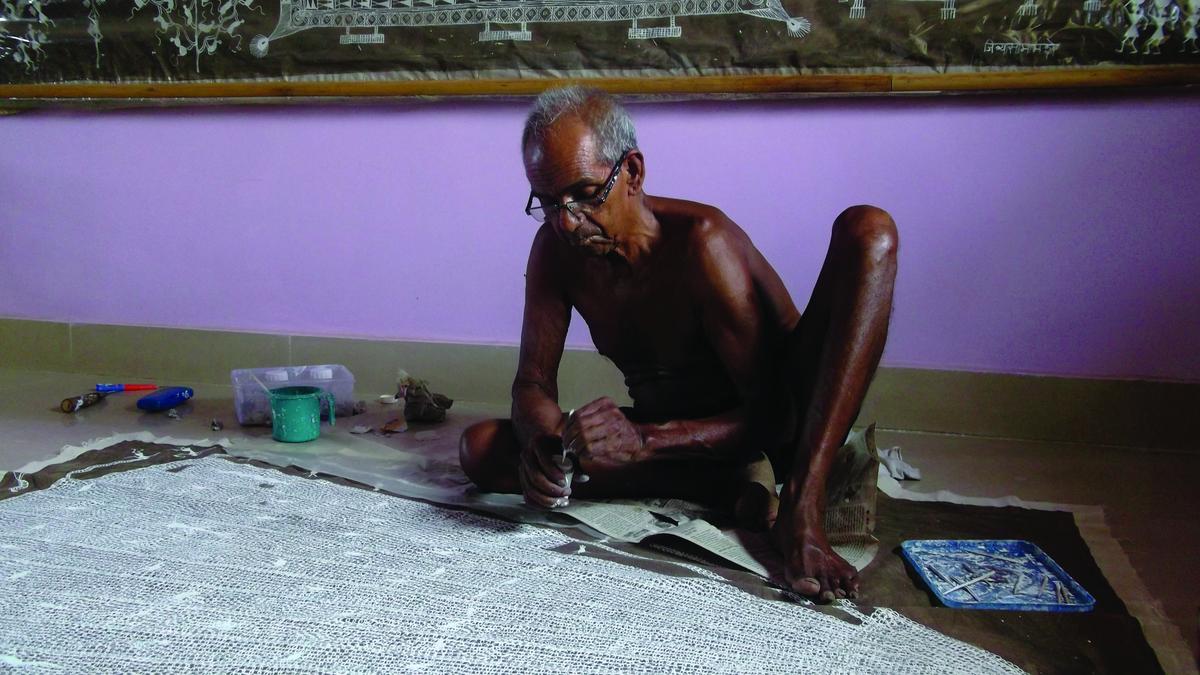
The art in question is Warli painting, a tribal visual form traditionally created by Adivasi communities of Maharashtra using simple geometric shapes to depict scenes of daily life, nature and myth. Originally reserved for ritual illustration on the mud walls of homes, Warli painting has entered the global stage thanks to artists such as Jivya Soma Mashe, whose modern reinterpretations transformed an ephemeral ritual practice into a recognisable contemporary art form.
From Ritual Walls to Global Curatorial Projects
Warli art traditionally uses white pigment made of rice paste on ochre backgrounds to display figures engaged in farming, dancing and everyday life, communicating stories through abundant visual simplicity.
For many decades, this art was local and ritualistic — created for weddings, harvests, and festivals within tribal communities. But in the 1970s, artists like Jivya Soma Mashe began to paint Warli motifs on paper and canvas, bringing the form into the mainstream art world. His work helped elevate the tradition from village walls to gallery exhibitions and international museum shows.
It is this journey — from indigenous ritual art to global exhibitions — that inspired a French art curator to explore Warli painting’s visual language and cultural depth in an exhibition. The curator’s interest reflects how tribal art, rooted in daily life and cosmology, can resonate with wider art audiences and challenge dominant narratives in contemporary art.
Global Roots of Local Art
The French curator’s engagement with Warli art is part of a broader pattern in the art world: indigenous and folk traditions are increasingly influencing international exhibitions and scholarship. Curators and institutions outside India have been drawing on Warli painting not just for its iconic imagery but for what it reveals about the intersections of culture, community, ritual and narrative.
Warli’s ascent on the global scene — from tribal ceremony to gallery wall — highlights how traditional visual idioms can transcend geography and speak to universal artistic concerns, such as the relationship between humans and nature or the use of minimal forms to convey complex socio-cultural meanings.