The Wildlife Photographer of the Year competition continues to showcase the world’s most breathtaking moments from nature. This year’s top 100 images will be on display at the Natural History Museum, London from 17 October 2025 to 12 July 2026. Each image not only captures a fleeting glimpse of wildlife but also tells powerful stories …

The Wildlife Photographer of the Year competition continues to showcase the world’s most breathtaking moments from nature. This year’s top 100 images will be on display at the Natural History Museum, London from 17 October 2025 to 12 July 2026.
Each image not only captures a fleeting glimpse of wildlife but also tells powerful stories of conservation, survival, and resilience. Through insightful captions and behind-the-scenes films, visitors will discover how these extraordinary photographs highlight critical environmental issues.
Book your visit today and step into the heart of nature’s most powerful moments.
Special Delivery
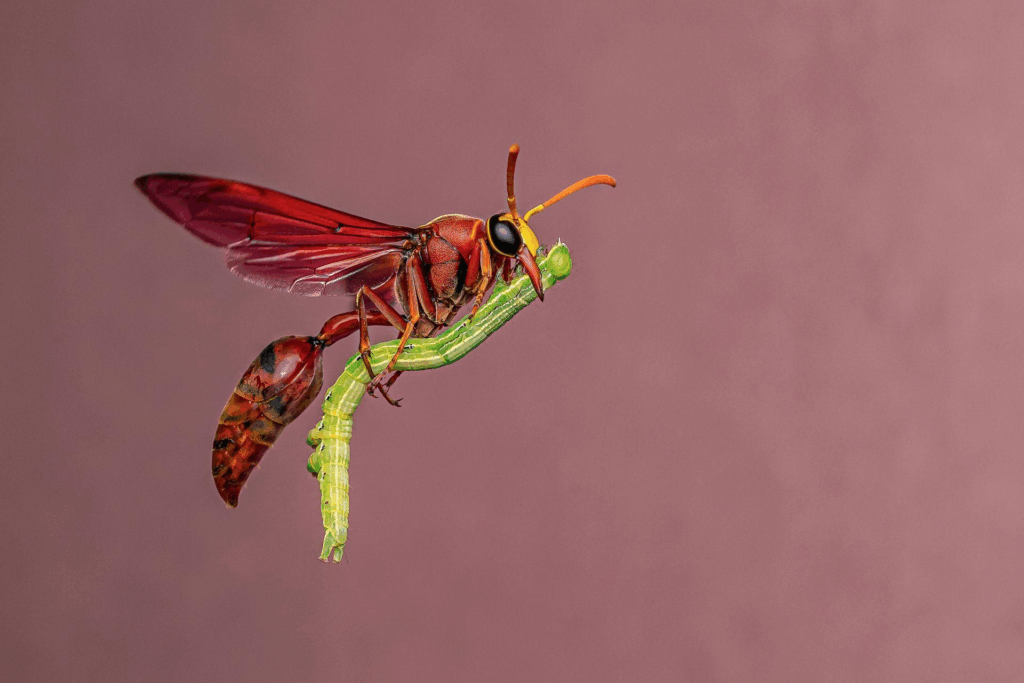
Category: Behaviour: Invertebrates – Highly Commended
Photographer: Bidyut Kalita (India)
📍 Location: Assam, India
A red potter wasp in mid-flight clutches a green caterpillar beneath its body. The blurred pink-purple backdrop draws attention to the insect’s deep red wings and its prey.
This highly commended shot by macro wildlife photographer Bidyut Kalita freezes an otherwise fleeting moment of predation.
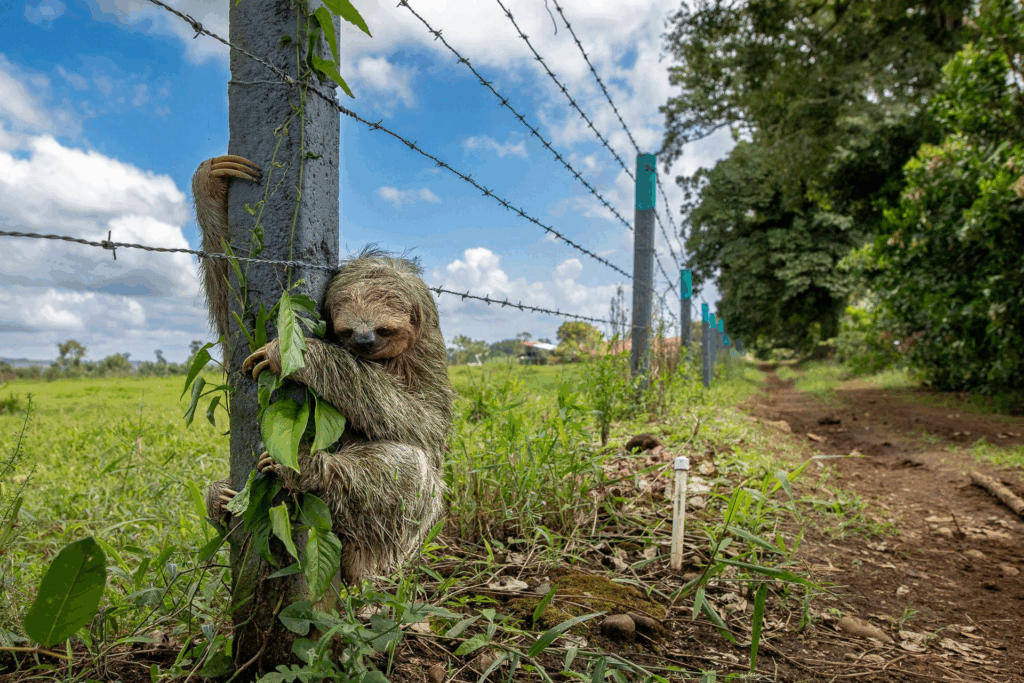
No Place Like Home
Photographer: Emmanuel Tardy (France)
📍 Location: El Tanque, San Carlos, Alajuela, Costa Rica
A brown-throated three-toed sloth grips a barbed wire post after crossing a dirt road. Behind it lies a lush green field, and to the right, the path it risked to reach the next tree.
As their habitats become increasingly fragmented, sloths are forced to cross open ground more often, leaving them vulnerable to accidents and predators.
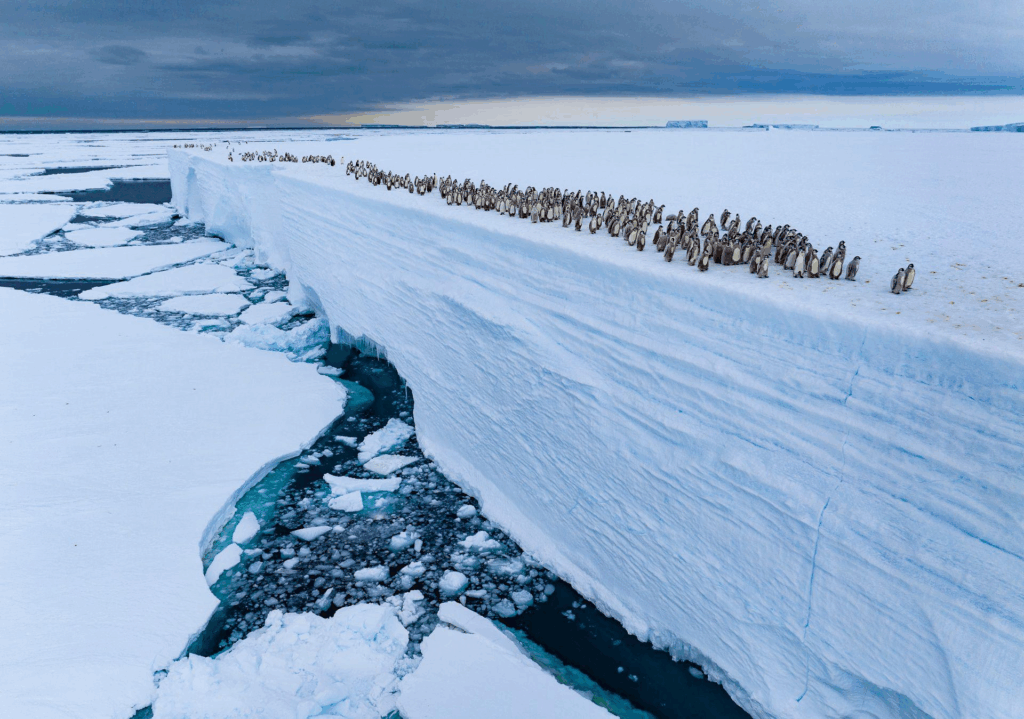
Ice Edge Journey
Photographer: Bertie Gregory (UK)
📍 Location: Ekström Ice Shelf, Atka Bay, Antarctica
A group of emperor penguin chicks gather at the edge of an ice shelf, preparing to leap into the icy waters below.
After observing the colony for two months, Gregory noticed most chicks descend safely via ice ramps—but this group faced the daunting leap. With climate change reducing sea ice, scientists fear penguins may be forced to nest on higher ice shelves, making dangerous plunges more common.
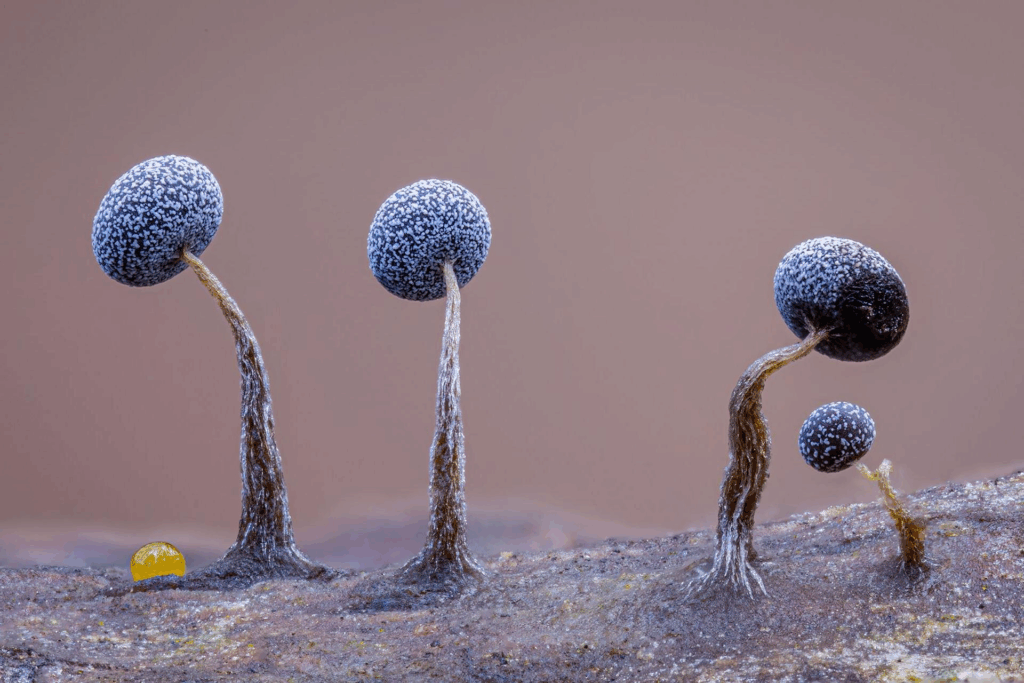
Slime Family Portrait
Photographer: Kutub Uddin (Bangladesh/UK)
📍 Location: Slindon Wood, West Sussex, UK
Tiny spherical slime moulds line a fallen mossy log, resembling miniature marbles. Among them rests a small yellow insect egg.
Mr Uddin described the find as a “bizarre family portrait.” Slime moulds are fascinating organisms: single cells that can join together to function as one, searching for food and reproducing collectively.
Rutting Call
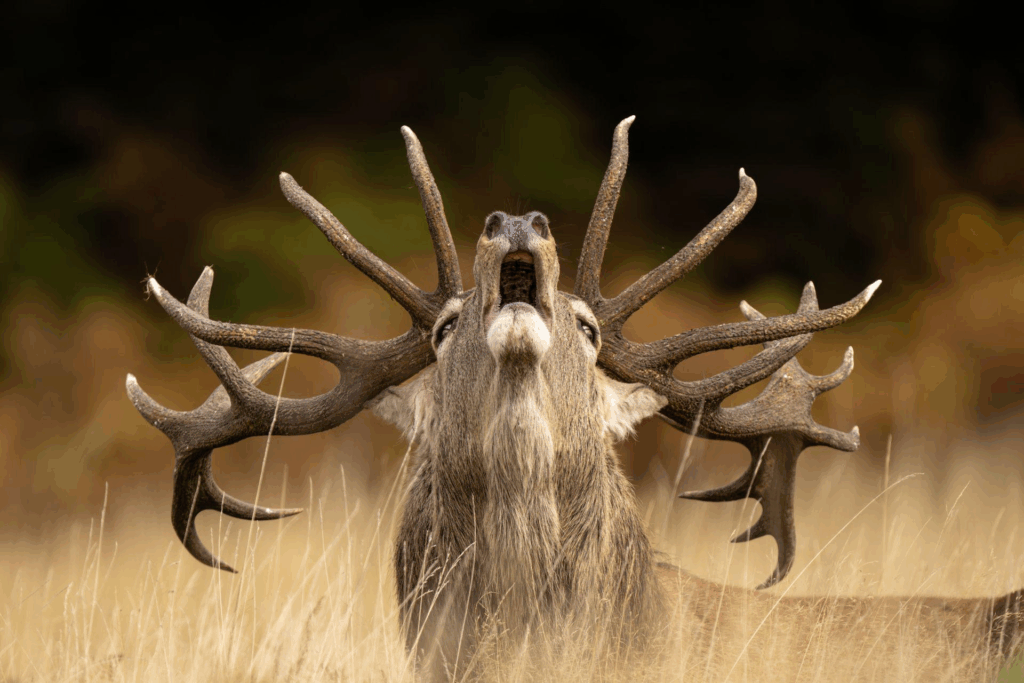
Photographer: Jamie Smart (UK)
📍 Location: Bradgate Park, Leicestershire, UK
A red deer stag raises its head mid-bellow during the autumn rut, antlers on full display.
Miss Smart captured the moment by carefully positioning above tall grasses. Each spring, stag antlers regrow larger and stronger, with new tines adding to their grandeur.
Inside the Pack
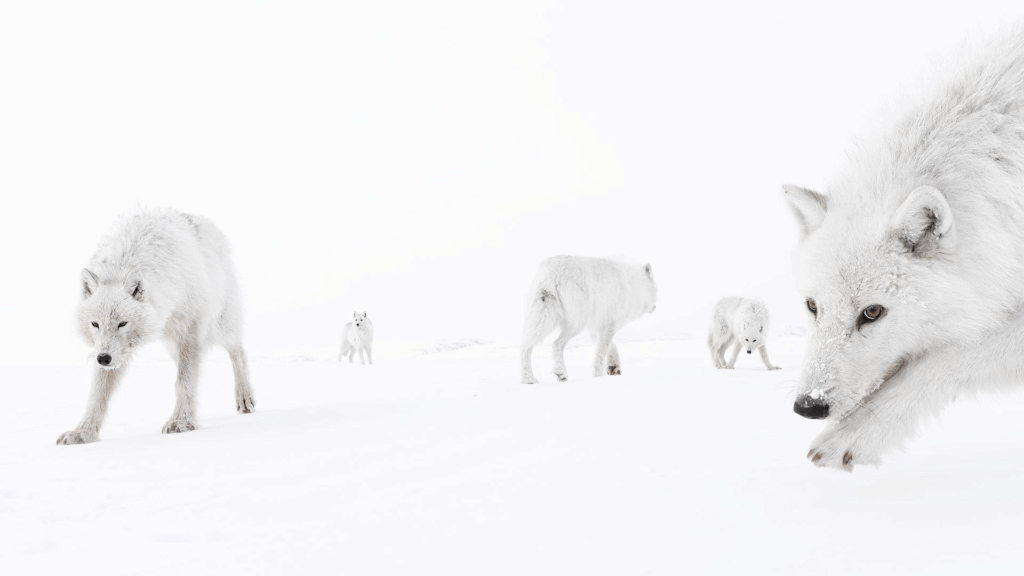
Photographer: Amit Eshel (Israel)
📍 Location: Ellesmere Island, Nunavut, Canada
A pack of Arctic wolves emerges from the snow, their thick white fur blending seamlessly into the frozen landscape.
Mr Eshel endured −35°C conditions to capture this extraordinary eye-level shot. The wolves’ curiosity brought them close enough for him to smell their breath. These rare encounters reveal how isolated Arctic wolves remain unafraid of humans due to minimal contact.
What’s Next?
The winning images of Wildlife Photographer of the Year 2025 will be announced on 14 October 2025, followed by the full exhibition at the Natural History Museum, London. The showcase will include 100 standout photographs from around the world, offering a remarkable journey into the beauty—and fragility—of our natural world.