One of the world’s most significant collections of Latin American art is poised for a dramatic expansion, following the acquisition of more than 1,000 additional works. The Museo de Arte Latinoamericano de Buenos Aires (Malba) will nearly double the size of its holdings after securing a major private collection, prompting plans for a large-scale physical …
Landmark Acquisition Set to Double Buenos Aires Museum’s Latin American Art Collection
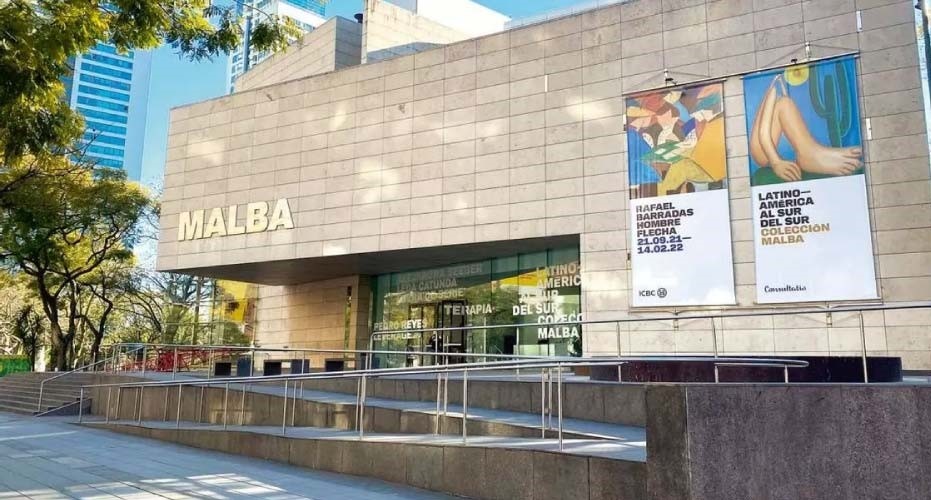
One of the world’s most significant collections of Latin American art is poised for a dramatic expansion, following the acquisition of more than 1,000 additional works. The Museo de Arte Latinoamericano de Buenos Aires (Malba) will nearly double the size of its holdings after securing a major private collection, prompting plans for a large-scale physical expansion of the museum. The project will begin next year in celebration of Malba’s 25th anniversary.
The acquisition was announced by Malba’s founder, philanthropist, and renowned collector Eduardo F. Costantini, who has purchased the Daros Latinamerica Collection based in Zurich. The collection comprises 1,233 works by 117 artists, dramatically increasing Malba’s total holdings to approximately 3,000 artworks. Costantini described the acquisition as transformative, citing the collection’s exceptional depth in post-1950 contemporary Latin American art.
The Daros collection includes major works by artists such as Doris Salcedo, Ana Mendieta, Julio Le Parc, Alfredo Jaar, Lygia Clark, and Jesús Rafael Soto, with 75 artists represented who were previously absent from Malba’s collection. Costantini noted that the acquisition significantly broadens the museum’s scope, particularly in contemporary movements and experimental practices that complement Malba’s modernist strengths.
“This is a major step forward,” Costantini said, acknowledging both the excitement and complexity of the acquisition. “It completely changes how we think about storage, conservation, research, and exhibition. Managing more than 1,200 additional works is thrilling—but it’s also a serious challenge.”
Long-Awaited Masterpieces Fulfill a Collector’s Vision
Among the newly acquired works are several that Costantini has sought for decades. He revealed that he had been searching for an exceptional piece by Colombian sculptor Doris Salcedo for nearly 30 years—and now has acquired two major works by the artist. Other standout pieces include Hélio Oiticica’s Relevo espacial (1959), Cildo Meireles’ Missão/Missões (Como construir catedrais) (1987), and Carlos Cruz-Diez’s Fisicromía 2 (1959).
The Daros collection is particularly rich in works by several key figures, including Liliana Porter, Luiz Camnitzer, and Guillermo Kuitca, as well as an extraordinary grouping of 42 works by Julio Le Parc. Many of Le Parc’s works were previously loaned to Malba for the artist’s 2014 retrospective, and Costantini welcomed their permanent return to South America.
For Costantini, the acquisition represents more than an expansion—it signals a cultural homecoming. He emphasized the importance of bringing these works back to the region, ensuring they are accessible to the public rather than remaining in private or overseas storage.
Complementing a Modernist Legacy
The newly acquired contemporary works will strengthen and expand Malba’s already celebrated collection, which includes landmark pieces of Latin American Modernism. The museum is home to masterpieces by Frida Kahlo, Diego Rivera, Tarsila do Amaral, Remedios Varo, and Roberto Matta, among others. With the Daros acquisition, Malba is positioned to offer a more comprehensive narrative of Latin American art across generations, movements, and geographies.
To house the expanded collection, Malba has unveiled plans for a major architectural expansion that will nearly double the museum’s footprint to approximately 90,000 square feet. The new exhibition and storage spaces will be constructed beneath Plaza Perú, the public square adjacent to the museum. The expansion will include new galleries for both permanent displays and temporary exhibitions.
Construction is scheduled to begin next fall, following celebrations marking 25 years since Malba’s founding in September 2001. The expansion is expected to significantly enhance the museum’s ability to present ambitious exhibitions, conduct research, and engage broader audiences.
Rising Global Demand for Latin American Art
Costantini has long been recognized as one of the most influential collectors of Latin American art, and the acquisition comes amid growing global interest in the field. Last year, he made headlines with his record-setting purchase of Leonora Carrington’s Les Distractions de Dagobert (1945) for $28.5 million, establishing a new benchmark for the British Surrealist, who spent much of her life in Mexico. The painting is currently a highlight of the exhibition “Dreamworld: Surrealism at 100” at the Philadelphia Museum of Art.
The surge in interest over recent decades has made the market increasingly competitive. Costantini reflected on how dramatically conditions have changed since he began collecting.
“When I started, museums didn’t have dedicated Latin American acquisition programs or specialized curators,” he said. “That allowed me to acquire exceptional works at reasonable prices.”
He noted that one Frida Kahlo painting he purchased years ago for $3 million would likely command more than $100 million today, placing it far beyond his current purchasing capacity. Many of the masterpieces he acquired earlier in his career, he added, would be nearly impossible to assemble under today’s market conditions—making the Daros acquisition a uniquely rare opportunity.
The Legacy of the Daros Collection
The Daros Latinamerica Collection was founded in 2000 by Ruth Schmidheiny and her then-husband, Swiss entrepreneur and philanthropist Stephan Schmidheiny. In 2015, Ruth Schmidheiny closed the privately run Casa Daros museum in Rio de Janeiro, which had opened just two years earlier at a reported cost of $26 million.
Over the past decade, the Daros collection has continued to play an influential role through loans to major international exhibitions, including “Tools for Utopia,” a survey of Latin American abstract and concrete art held at the Kunstmuseum Bern in 2020.
With its acquisition by Malba, the collection enters a new chapter—one defined by public access, regional stewardship, and an expanded vision for the global understanding of Latin American art.