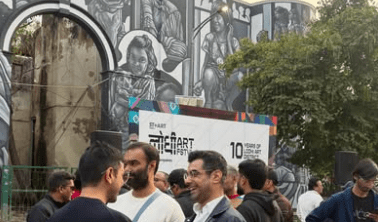
The Lodhi Art District is currently witnessing its most significant milestone. This year marks a decade since the St+art India Foundation first turned a nondescript government wall into a canvas, and the 2026 Lodhi Art Festival is celebrating this tenth anniversary with a month-long takeover. Running from February 1st to the 28th, the festival is …

The Lodhi Art District is currently witnessing its most significant milestone. This year marks a decade since the St+art India Foundation first turned a nondescript government wall into a canvas, and the 2026 Lodhi Art Festival is celebrating this tenth anniversary with a month-long takeover. Running from February 1st to the 28th, the festival is operating under the theme “Dilate All Art Spaces,” a concept that suggests art shouldn’t just be a destination you travel to, but an ecology you inhabit.
The 2026 edition introduces six new murals by Indian and international artists, adding fresh stories to Lodhi’s ever-evolving walls. Beyond the murals, the festival invites Delhi to participate through weekend panel discussions, guided walkthroughs, curated photowalks, and hands-on workshops.
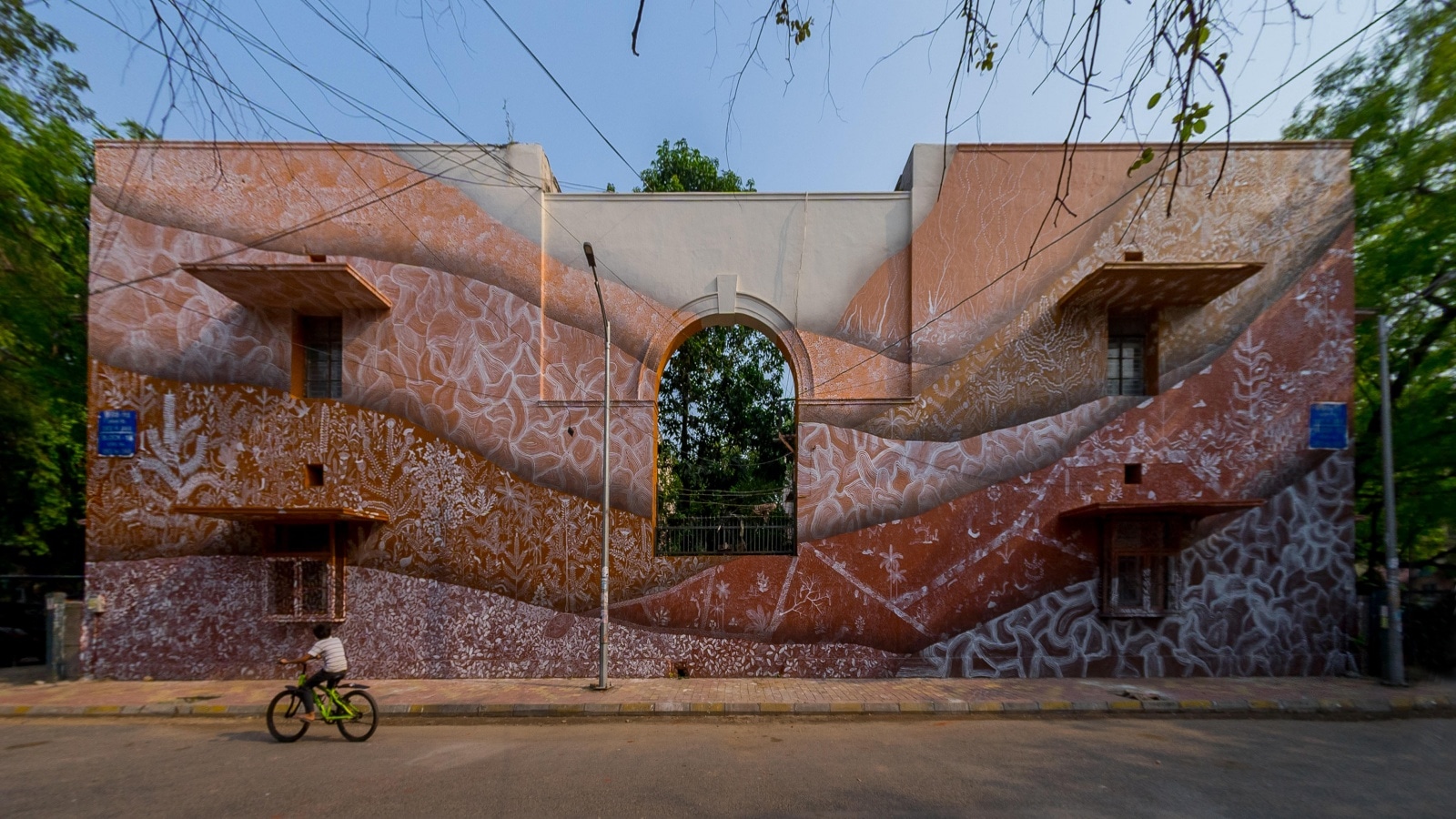
Supported by Asian Paints, Lodhi Art Festival invites the city to experience art as part of everyday life. Walking through Lodhi Colony right now feels less like visiting a gallery and more like reading an anthology where the pages are three stories high and made of brick. There is no loud music or neon signage, just the steady hum of a South Delhi afternoon and the visual dialogue between sixty-five massive murals.
A Decade of Concrete Narratives
Lodhi Colony has a specific architectural rhythm. Built in the 1940s, it was the last residential estate constructed by the British in Delhi. It is defined by its symmetry: rows of three-story apartment blocks with high arches and uniform facades. For decades, these were merely functional spaces for government employees.
The transformation into India’s first public art district began in 2015. Over the last ten years, the area has moved beyond being just a “beautification project.” It has become a site of cultural preservation and social commentary. The 2026 festival acknowledges this history by adding six new murals, bringing the total count to sixty-five. These new additions aren’t just splashes of color; they are collaborations between international perspectives and local realities.
Ecology and Abstraction
One of the most striking new works this year is a collaboration between Indian artist Svabhu Kohli and a thirteen-year-old artist from Arunachal Pradesh, Ram Sangchoju. Their mural is rooted in the ecology of the Pakke Tiger Reserve. As someone who appreciates narrative, you’ll notice the mural doesn’t just depict nature; it documents a relationship with the forest. It stands as a sharp, green contrast to the dusty grey of the city.
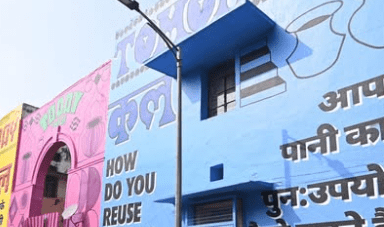
In a different vein, the late Hanif Kureshi, a co-founder of St+art who passed away in 2024, is honored through a posthumous collaboration with London based artist Raissa Pardini. Their typographic mural focuses on water conservation. It is a poignant inclusion, a final word from a man who spent a decade advocating for “Art for All,” reminding us that even the most beautiful streets cannot survive without basic ecological mindfulness.
Other new contributors include German artist JuMu, who explores Indian and Peruvian concepts of reality, and Polish artist Pener, whose work leans into pure abstraction. These additions ensure that the district continues to evolve rather than becoming a static museum of its own past.
More Than Static Walls
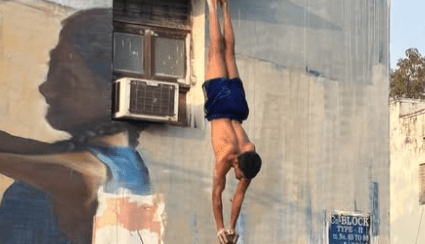
What makes the 2026 festival distinct is its focus on movement. The festival opened with a performance titled “Elevation” by French artist Yoann Bourgeois. Set against the backdrop of a mural, a man repeatedly attempted to climb a wooden staircase, only to fall onto a trampoline and bounce back. It was a literal representation of the cycle of human effort, ascent and collapse, performed right on the street for residents and passersby.
Beyond performances, the art has literally started moving. The Cycle Rickshaw Project has seen ten local rickshaws transformed into mobile artworks. These designs were created by artists who have worked in the district over the last decade. It’s a clever way to acknowledge the people who actually navigate these lanes every day. When you see a rickshaw draped in the same patterns as a mural you passed three blocks ago, the distinction between “art” and “utility” begins to blur.
Navigate the District
If you’re visiting for your blog, the best way to experience Lodhi is to ignore the “Instagram spots” and focus on the arches. The arches are the unifying element of the colony. Some artists use them as frames, while others treat them as windows or even mouths.
- The Pigeons (Block 15): A classic mural by Adele Renault. It’s hyper-realistic and makes the most mundane city bird look monumental. It’s a reminder to look at the small things with more weight.
- Cause & Effect: This mural uses the architecture to show how one action leads to another. It’s a visual representation of a plot line, perfect for a literature student to analyse.
- The Inflatable Installation: Keep an eye out for the temporary inflatable “blooming garden” by Nicolas Barrome Forgues. It moves around the city, appearing as a sudden, soft landscape of surreal flowers amidst the hard concrete.
Practical Details for Your Visit
The festival is entirely free and open to the public, though some weekend workshops and curated walks require registration.
| Detail | Information |
| Dates | February 1–28, 2026 |
| Location | Between Khanna Market and Meherchand Market, Lodhi Colony |
| Nearest Metro | Jor Bagh (Yellow Line) or JLN Stadium (Violet Line) |
| Best Time | 10:00 AM to 5:00 PM for natural light |
| Walking Time | Approximately 2–3 hours to see the major murals |
The Value of the Unfinished
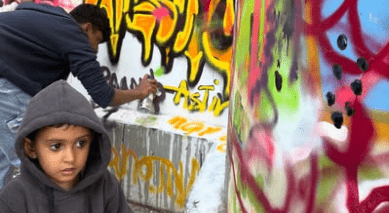
As you write your article, consider the interaction between the residents and the artists. During the opening week, children from the colony were seen using leftover spray cans to add their own drawings to dustbins and gates. This isn’t vandalism here; it’s an extension of the festival’s spirit.
Lodhi Art District isn’t trying to be the Louvre. It’s a neighbourhood where people dry their clothes on balconies next to murals worth thousands of dollars. That lack of pretension is its greatest strength. It is a living, breathing archive of Delhi’s current artistic temperature.