A 19th-century masterpiece by legendary Indian painter Raja Ravi Varma recently made global art headlines after achieving an unprecedented price at auction. The oil on canvas work titled “Yashoda and Krishna” was sold this week for an astonishing ₹167.2 crore (about $18 million) at a high-profile sale held by Saffronart in Mumbai, setting a new …
Raja Ravi Varma’s Yashoda and Krishna Sale Sparks New Conversations on Art, Myth and Memory
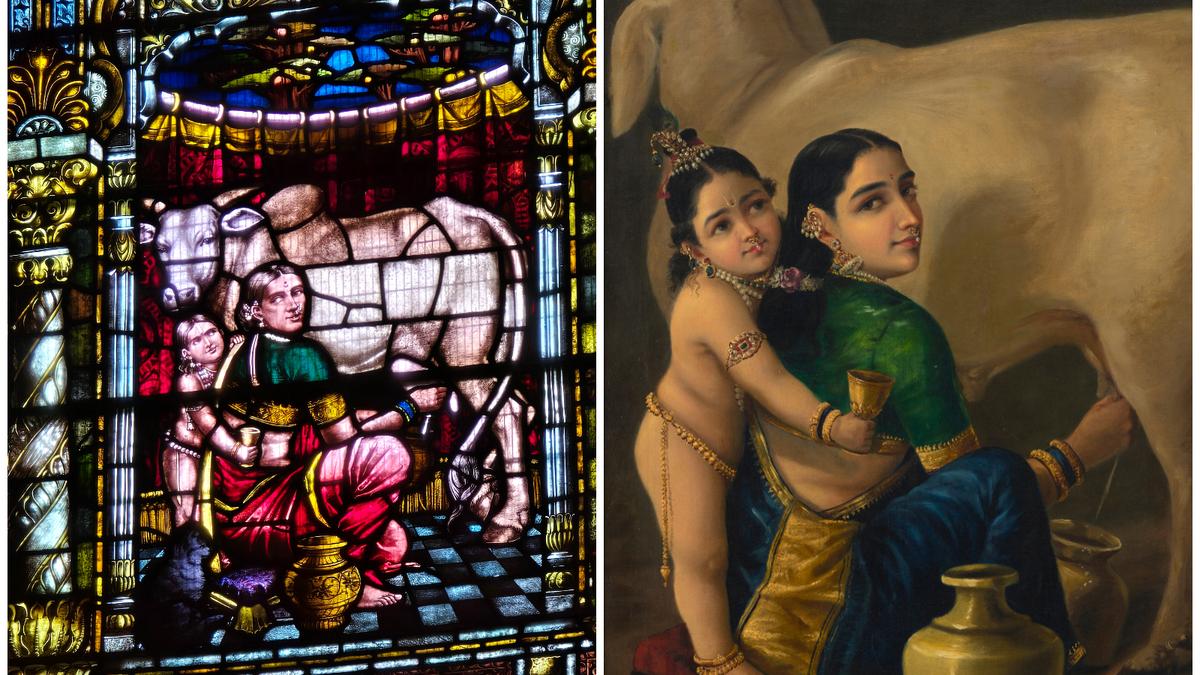
A 19th-century masterpiece by legendary Indian painter Raja Ravi Varma recently made global art headlines after achieving an unprecedented price at auction. The oil on canvas work titled “Yashoda and Krishna” was sold this week for an astonishing ₹167.2 crore (about $18 million) at a high-profile sale held by Saffronart in Mumbai, setting a new record for any Indian artwork ever sold at auction.
The painting — believed to have been created in the 1890s during the peak of Varma’s career — depicts a tender moment between the Hindu deity Krishna as a child and his foster mother Yashoda, a subject drawn from Indian mythology that has resonated across generations. Its blend of European realism and Indian mythological content exemplifies the distinct artistic style that made Varma a pioneering figure in modern Indian art.
What has intrigued both art lovers and cultural commentators is how Varma’s imagery helped shape the visual imagination of Hindu deities and narratives in the modern era. While images of Krishna and Yashoda existed in Indian storytelling and local craft traditions long before Varma’s time, his iconic portrayal — replicated widely through lithographs and prints since the late 19th century — became one of the most familiar representations of this mythological bond in popular culture.
The winning bidder at the auction was industrialist Cyrus S. Poonawalla, founder of the Serum Institute of India, who described the acquisition as an effort to preserve a “national treasure” and expressed plans to make the work periodically available for public viewing.
Art experts say the sale doesn’t just cement the monetary value of Varma’s work but also highlights its lasting influence on Indian visual culture, where his depictions have often become the default visual reference for mythological figures among contemporary audiences — despite earlier artistic traditions predating his interpretation.